
Residential applications
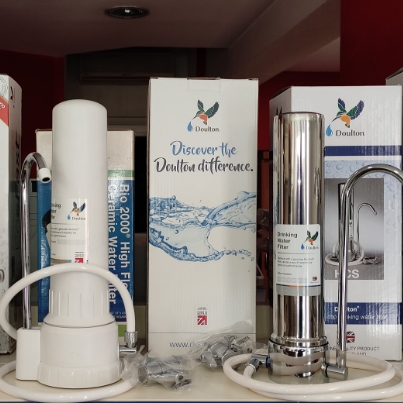
Filters of polypropylene cartridges, ceramic, activated carbon and reverse osmosis, which are placed either in the main installation of the network or on the kitchen counter to provide clean, sterile water, delicious and without unpleasant odors. Filters to produce water for consumption by kidney patients or for the implementation of a diet low in sodium.
Small softeners for protection against the formation of salts in heating and hot water production systems, washing machines and dishwashers, pool water and spa.
Filtration systems for the treatment of drilling water for irrigation and water supply of settlements. Sterilization or supplementary chlorination of private networks and water storage tanks.
They have all the specifications and international certificates of suitability for use in drinking water (NSF, WRAS).
Cartridge filters
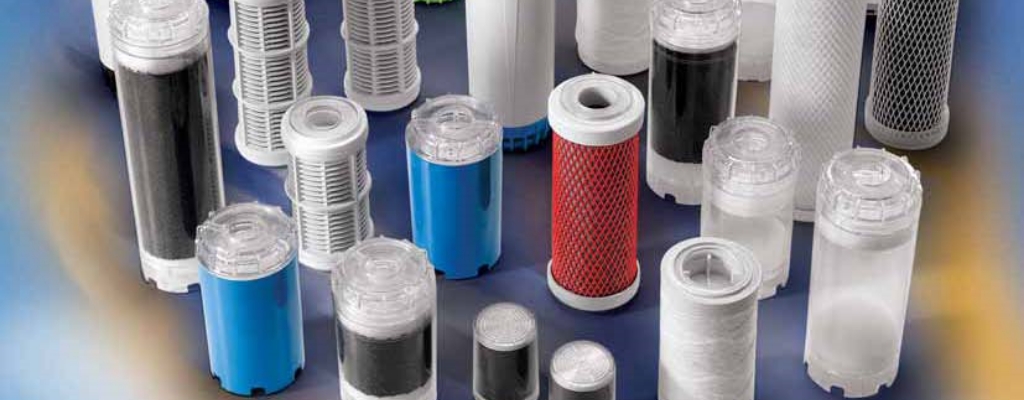
Cartridge filters consist of a plastic device, transparent (PP) or opaque (PET), which depending on the processing application contains the corresponding cartridge. There are polypropylene cartridges of different permeability (50μm, 20μm, 5μm, 1μm) suitable for filtering suspended particles such as soil, sand, rust, etc.
For greater degree of removal there are ceramic material cartridges with a porosity of 0.3μm in size, which can remove very small particles such as bacteria, cysts and viruses larger than 0.3μm in diameter.
For the removal of chlorine, organic materials but also the bad taste and smell, there are activated carbon cartridges in granular or solid form for even greater retention of suspended particles.
Cartridges with different fillers can also remove salts, iron and heavy metals.
Reverse osmosis filters
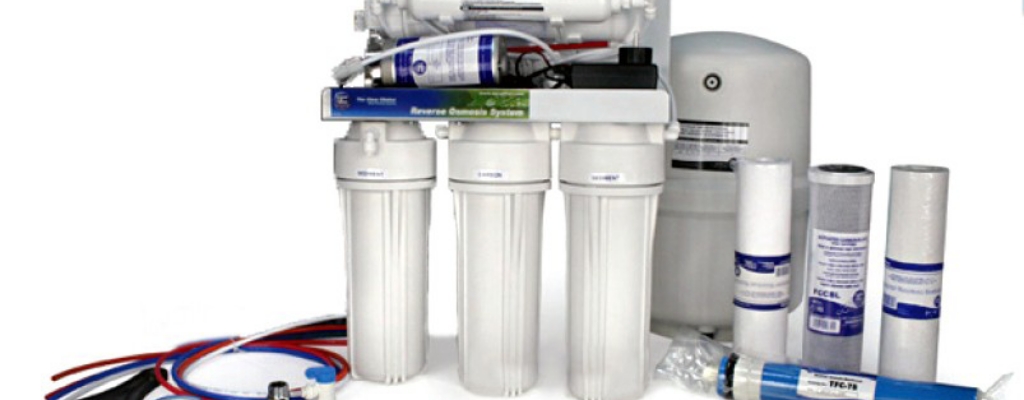
Reverse osmosis is one of the most effective water purification technologies, which achieves a high degree of removal of up to 99.8% by filtering pollutants of extremely small size less than 0.004μm. In this way water is produced free from viruses, germs but also heavy metals, nitrates or arsenic.
The home reverse osmosis system consists of 6 filtration stages and is installed under the kitchen sink with a separate tap and storage tank, for the use of exclusively drinking water. Its special features offer:
• Ideal source of clean and safe drinking water for babies
• Its use in cooking ensures the preservation of vitamins necessary for human health
• Preserves the aroma and taste of coffee and tea
• Preserves the necessary metal elements
• Protects household equipment from scale build-up
• Can also be used for watering flowers
Filtering stages
1. 5m & 1m suspension filter: Removal of particles (dirt, mud, rust, etc.)
2. Granular carbon filter: Removal of chlorine and organic compounds
3. 1m suspension filter: Removal of particles
4. Osmosis membrane filter 0.004m: Removal of ions, metals, viruses, germs
5. Activated carbon block filter: Taste and odor improvement stage
6. Mineralizing filter: Final stage of flavor improvement
Residential automatic softeners
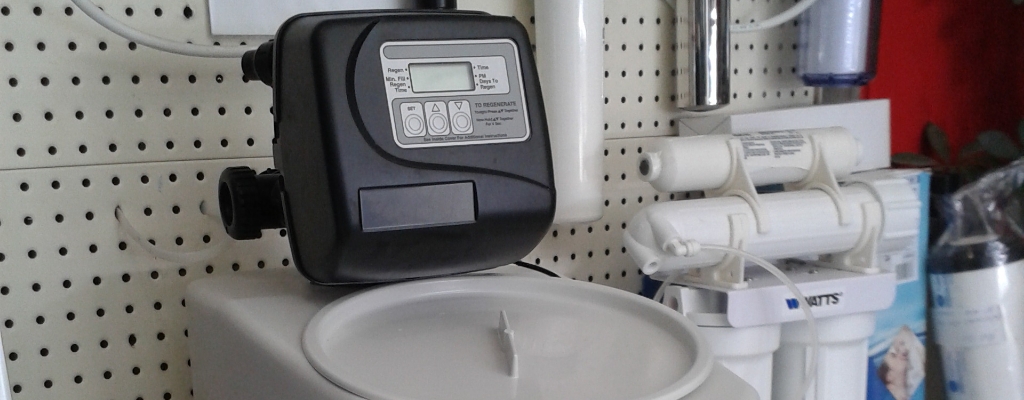
Water is often characterized as hard, which means that its content of calcium and magnesium salts is high, resulting in deposits and stone formation especially in heating appliances (coffee machine, hot water tank, washing machine, etc.), impeding their efficient operation and causing significant damage.
For this reason, you suggest the installation of an automatic softener, which permanently removes calcium and magnesium salts from the water. This is achieved using ion exchange resin suitable for drinking water (food grade), which with the passage of water inside it exchanges calcium ions (Ca + 2) and magnesium (Mg + 2) with sodium ions (Na +). When the resin is saturated then it cannot exchange other ions and must be regenerated with salt which is in the form of brine in the softening bucket.
The whole operation is automatic and controlled by the head valve central programmer. The process of regeneration is defined either temporally or volumetrically based on the program that we will store and usually takes place at night when consumption is zero. The only obligation is to periodically replenish the brine bucket with salt.