
Heat pumps
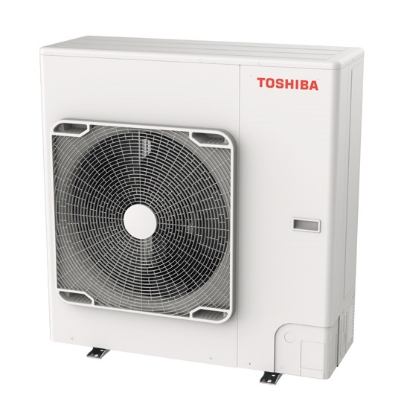
TOSHIBA and CARRIER air-water heat pumps are considered an ideal solution for heating or cooling for domestic applications as well as to produce domestic hot water. Heat pumps have been characterized as a renewable energy (RES) technology, contributing substantially to energy savings. For this reason, they actively participate in all state-owned European energy saving programs, as they replace the traditional heating systems and classify the new and renovated houses in the highest energy class.
Heat pumps consume electricity to heat the circulation water in the heating elements such as radiators, fan coils, underfloor heating but also to heat the domestic hot water. The great advantage of this technology is that it produces heat three times or even four times the power in relation to the power it consumes. So, we can heat a room with 1/3 or even ¼ of the electricity we would need to heat it with simple electric bodies. Because this extra energy is taken from the outside environment and used to heat the interior, it is called a heat pump.
Heat pumps are divided into two types, split type such as TOSHIBA ESTIA heat pumps and monobloc type such as CARRIER AQUASNAP heat pumps. The difference lies in the type of hydraulic unit, which in split type heat pumps is a separate device from the outdoor unit and is usually placed indoors. Unlike compact monobloc type heat pumps, the hydraulic unit is integrated in the outdoor unit.
The hydraulic units are responsible for the circulation of water through the terminals (radiators, fan coil, underfloor heating). They provide heating or cooling in one or two temperature zones and produce hot water for use when connected to a hot water tank (heat boiler). The built-in plate heat exchanger produces heating water from 20 oC to 65 oC at an outside temperature of -25 oC and cooling water from 7 oC to 25 oC at an outside temperature of up to 43 oC.
The outdoor unit is responsible for heating or cooling the circulation water through a freon heat exchange element, such as the new eco-friendly refrigerant R-32 using twin rotary inverter compressors.
The control of the units is done by the central control which is also a central controller of management and configuration for the optimal financial operation. The central controller has a built-in temperature control with temperature compensation programs and proportional adjustment of the inverter compressor for maximum efficiency and economy in consumption.
Heat pumps can be used either exclusively for heating a home or combined with traditional heating systems such as oil or gas boilers to create hybrid systems. In these systems, the heat pump undertakes the heating of the house exclusively up to a specific value of outside temperature set by the user and when the outside temperature falls below this limit, then the second “traditional” heating system is activated.