
Indoor air quality
Indoor air quality can be more harmful to health even compared to air pollution in urban environments. Volatile organic or inorganic toxic compounds, particulate matter and dust or hazardous microorganisms are some of the contaminants that affect the indoor environment of homes or businesses.
UV-C (Ultraviolet) Disinfection
Air conditioning systems, and especially air management units (AHUs), are the perfect environment for the growth and multiplication of pathogenic microorganisms, spores and mold. The recirculation of air and the fluctuations of temperature and humidity allow them to be combined with each other in complex ways and to be installed on all surfaces within the air conditioning system in the form of biofilms. The biofilm adheres mainly between the blades of the heat exchanger, settles in the drainage basins and is retained in the filters inside the air ducts.
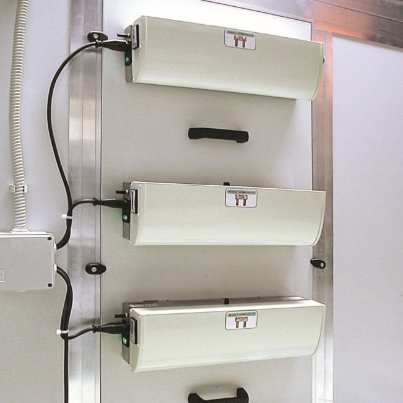
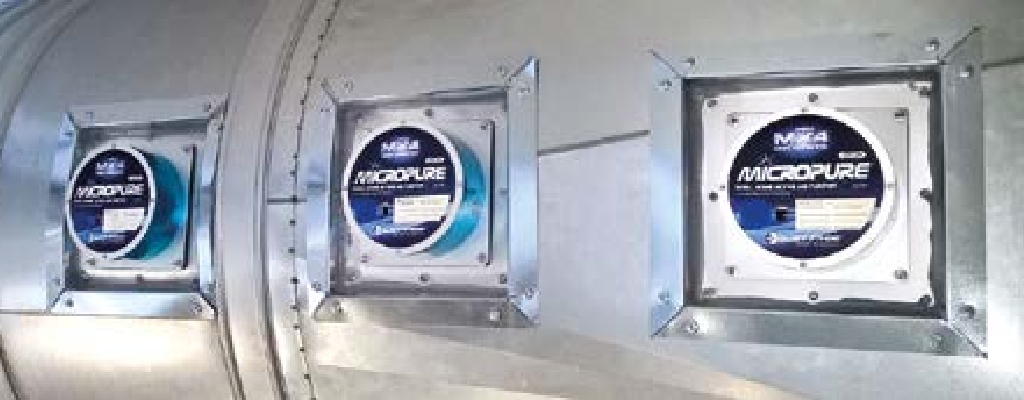
UV-C radiation damages DNA and inhibits the growth and multiplication of microorganisms. UV generators have lamps that emit wavelength light in the UV-C spectrum. These devices are installed inside the air conditioning systems, either directly on the switch or in the supply network of the air duct network. UV-C radiation can also be combined with photocatalytic oxidation filters for higher disinfectant action in air filtration.
Applications in air conditioning and ventilation installations in industry, in office buildings, restaurants, hospitals, hotels but also for home use.
Air treatment with activated carbon filters
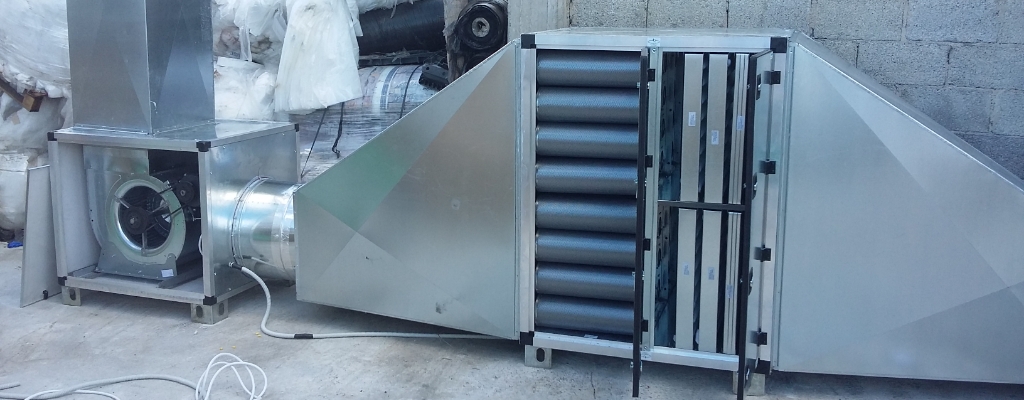
The activated carbon of air treatment filters is in granular form and has the property of adsorbing on its surface odorous volatile compounds and organic substances with toxic properties. Also due to its granulometry and the formation of an active bed, it is a filter for retaining medium-sized suspended particles.
It is commonly used for odor removal applications in industry, sewage treatment plants, food preparation kitchens and restaurants.
Air treatment with absolute filters (HEPA)
The ultimate HEPA type filter is a kind of pleated mechanical air filter. Its name comes from the English terminology High Efficiency Particulate Air. This type of air filter can theoretically remove at least 99.97% of dust, pollen, mold, bacteria and any 0.3 microns (μm) airborne particles. The 0.3 microns diameter specification corresponds to the worst case which means the most penetrating particle size.
Absolute filters are graded based on the MERV index, depending on their ability to retain particles with a diameter larger between 0.3 and 10 microns (μm). Their rating with the MERV index is defined based on the ASHRAE methodology from 1 to 16, where the higher the index the higher the efficiency of the filter in retaining the specific type of particles.
They are used autonomously or in filter arrays for the total treatment of air in clean room applications, in industry, hospitals, biotechnology laboratories.
Heat recovery and exchange
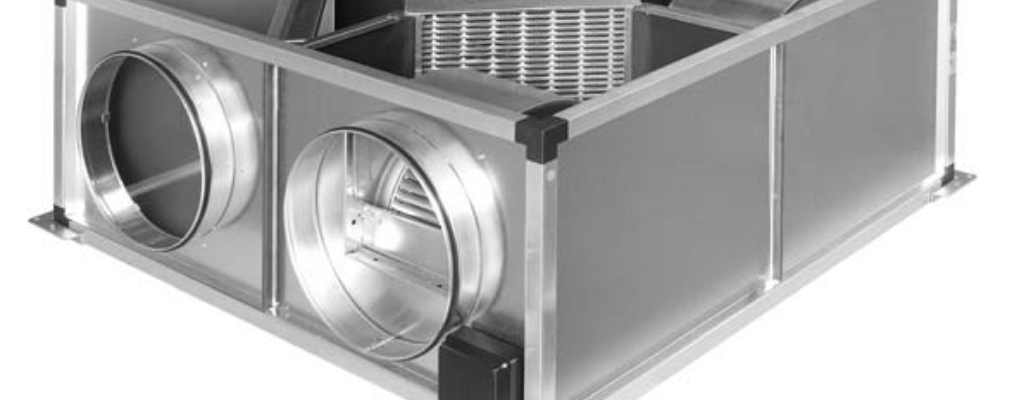
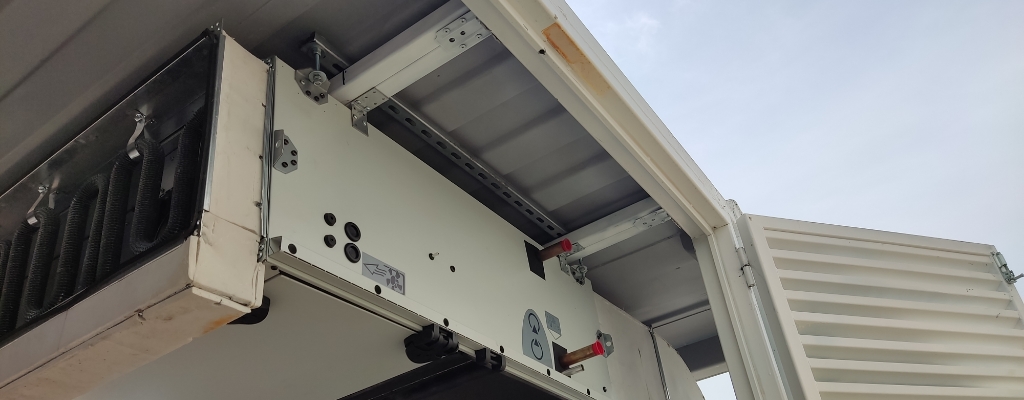
In professional and domestic ventilation applications the heat of the exhaust air is lost in the external environment. By using air-to-air heat exchangers it is possible to recover a percentage of the heat dissipated and transfer it to the incoming fresh air for preheating. Respectively in cooling, the fresh air is pre-cooled by the lower temperature stream of ventilation and thus less energy is required to cool the rooms. This ensures significant energy savings and reduces operating costs.
According to the new regulations for the construction of passive buildings (Passive House), their design should meet the criteria for almost zero energy consumption. In this context, a passive building should be largely airtight with minimal air currents and cracks. It therefore requires continuous 24-hour ventilation with clean filtered air. This air through the air-air heat exchanger and the filter array will enter from the outside environment to the interior of the building pre-conditioned and filtered.
The efficiency of an air-to-air heat exchanger can reach up to 85% and in combination with the high level of thermal insulation of the building to achieve maximum thermal comfort and clean atmosphere with minimal energy requirements.