
Professional applications
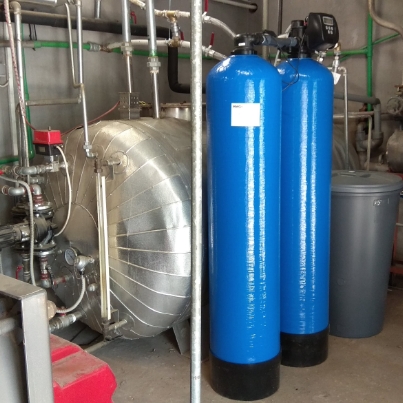
Water treatment for the supply of public and private water supply networks, production and processing facilities for food and beverages, hotel facilities, dyeing laundry, car washes, production of pharmaceutical products and solutions, power stations.
Filtration
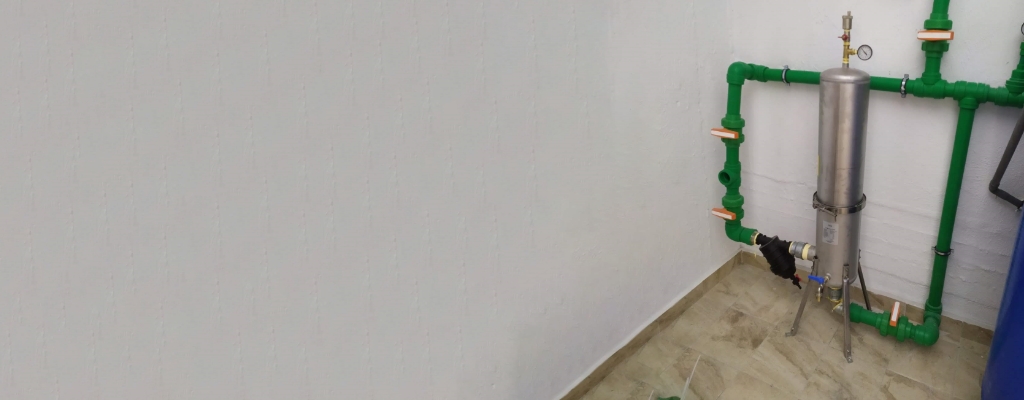
It is the natural process for the removal of various pollutants of natural or biological origin which are insoluble and suspended in water. The removal process is done by passing water under pressure through a material with openings or pores of different diameters, or from a bed of filler material of different granulometry. Depending on their size, these particles are retained by the filtration material and removed in various ways such as filtration, mechanical scraping, gravitational precipitation and reverse washing.
These pollutants are formed during the collection of water in the underground aquifer and water recipients or during its transport through the distribution networks.
Activated carbon filtration systems
Automatic filtration systems with activated carbon bed in granular form in plastic pressure vessels with control head of programmable function. The activated carbon bed is used as the 2nd treatment step usually after the chlorination process for the oxidation of microorganisms and various pollutants. In the 2nd step it removes the residual chlorine, color, unpleasant smell and taste, turbidity, Trichloroethylene, trialοmethane (THMs), chloroform, herbicides, polyaromatic hydrocarbons, polychlorinated biphenyls (PC), other polyphenols (P).
Nitrate filtration systems - Neutralizers
Automatic systems for the removal of nitrates by the method of ion exchange from anionic polymer resins where chlorine ions are exchanged for nitrate ions. The removal of nitrates is done by rinsing the resin bed which after saturation returns to its original state by the process of regeneration with salt. The whole process is programmed and controlled temporally or volumetrically through the electromechanical valves of the filter head.
The control valves are from the American company Clack Corporation USA and the Chinese company FOBRITE.
Iron and manganese filtration systems
Specialized ion exchange resins for the removal of iron, manganese and arsenic from drilling water and wells. Design of water treatment systems for the supply of houses, settlements and municipal water supply networks. The following fillers are often used with high efficiency for iron and manganese removal.
ECOMIX filler
Automatic iron and manganese removal systems with the innovative ECOMIX filtration filler. ECOMIX is a mixture of fillers for the simultaneous removal of iron, manganese and hardness, total organic materials and ammonium ions. Its function is like that of a softener as it is placed in a bed in plastic containers with a programming valve on the head so that after a certain volume of water it is regenerated with salt in the form of brine. With ECOMIX we achieve 5 in 1 protection of water from polluting components often occurring in groundwater and drilling.
PYROLOX filler
Automatic systems with PYROLOX filler for the removal of hydrogen sulfide, iron and manganese. Its operation is based on the oxidation and retention of the oxidation products of iron, manganese and hydrogen sulfide from the bed of the material which are then removed to the drain during the rinsing process of the filter. It has a high resistance to chlorine concentration so it can be used for water with residual chlorine or as a second stage of oxidation after chlorination.
The control valves are from the American company Clack Corporation USA and the Chinese company FOBRITE.
Softening
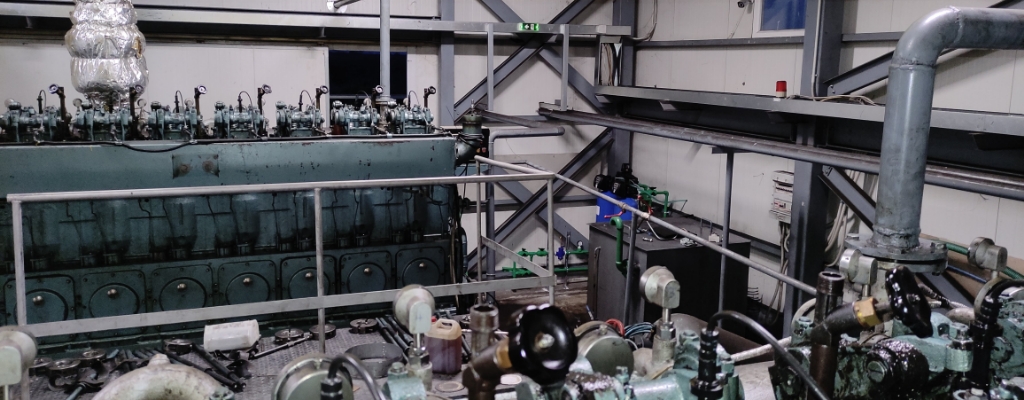
Softening is the reduction of calcium and magnesium salts as well as other cations in hard water. These cations create deposits of salts in water supply networks and especially in appliances that use or produce hot water such as boilers, steam generators, hot water storage tanks. The result is a blockage of the network piping and an increase in energy consumption due to a greater pressure drop. The reduction of heat transfer capacity in heating and domestic hot water systems also causes a decrease in efficiency and a significant increase in primary energy. Automatic softening systems are used in several professional applications such as
- Food and beverage processing industry
- Hotel applications for hot water, swimming pool or spa
- Washing machines and laundries
- Car washes
- Dyehouses – Tanneries
- Ice production industry
- Coffee machines
Softening is based on the ion exchange process of a strongly cationic sodium ion resin (R-Na), which exchanges calcium (Ca + 2) and magnesium (Mg + 2) ions with ions as water passes through it. sodium (Na +). When the resin is saturated then it cannot exchange other ions and must be regenerated with salt which is in the form of brine in the softening bucket. The whole operation is automatic and controlled by the head valve central programmer. The regeneration process is defined either temporally or volumetrically based on the regeneration program that we will store and usually takes place at night when consumption is zero.
Selection of size and capacity
When designing a softening system, several parameters are considered for the optimal choice depending on the application. The most important sizing parameters are the required daily amount of water, the required hourly supply and the hardness of the water to be treated.
The head control valve in a softening unit is essential because it controls all the functions of the unit through the programmer. The control valves are between 1 ” and 3 ” with volumetric flows from 6 m3 / h to 100 m3 / h.
The cationic resin containers are made of FRP with fiberglass reinforcement for high corrosion protection and pressure resistance with diameters up to 1,800mm and a maximum resin volume of 2,000 liters. These units can be combined in parallel with each other and give double, triple or even multiple systems.
The control valves are from the American company Clack Corporation USA and the Chinese company FOBRITE.
KP offers a wide variety of softening systems at competitive prices covering the needs and requirements for each application.
Desalination by reverse osmosis
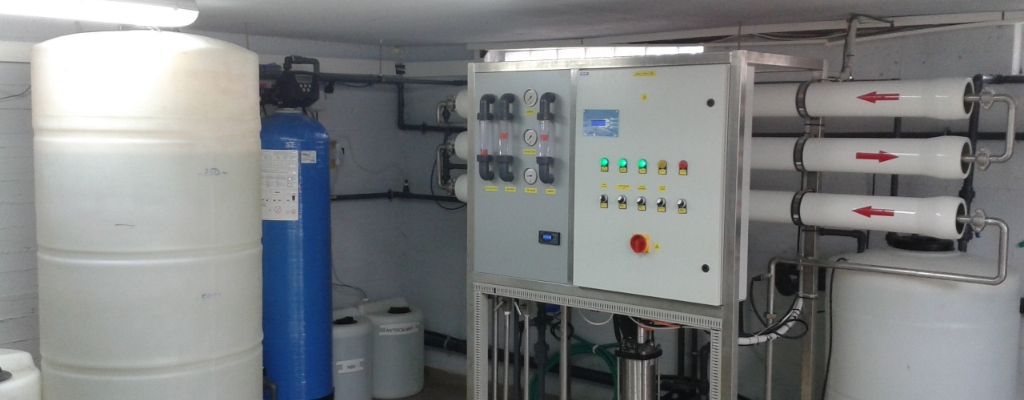
The reverse osmosis process removes 99% of the dissolved salts in the water by passing it under pressure through an array of semipermeable membranes of polymeric materials. The water to be treated enters the membranes at high pressure and is separated into two streams, a pure water production with low dissolved low conductivity salts and a concentrated drainage stream with high concentration of high conductivity salts. Concentrated and polluted water can alternatively be recycled and re-passed through the membrane array before being drained to save water or even passed through an energy recovery system before being discharged to a recipient.
The pressure exerted on the water for the passage through the membranes is proportional to the concentration of the salts and therefore to the initial conductivity, reaching even 55 Bar, for example, with the conversion of seawater into drinking water.
During their operation, the membranes are at risk of fouling due to the deposition of salts or due to the formation of biological film by microorganisms and organic load. There is therefore a need to pre-treat the water before feeding it to the reverse osmosis system. This pretreatment usually includes chlorine disinfection, multilayer filtration and activated carbon filters, the addition of chemical anti-corrosion agents and microfiltration filters. The produced salt-free water is mildly corrosive due to low pH and requires correction, while if it is intended for water supply, it can be additionally treated to correct the taste and acidity.
KP offers a complete set of reverse osmosis systems for the removal of salts from brackish or seawater to produce high quality water with low conductivity. Home and professional applications such as hotels, hospitals, analysis laboratories, food and beverage processing industries.
Disinfection
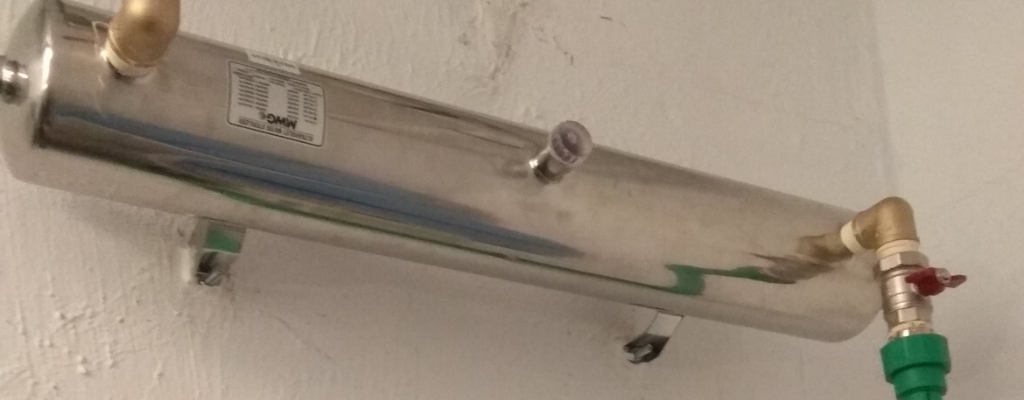
Complete set of systems for all supplies using ultraviolet radiation (UV-ultraviolet) to sterilize water from bacteria, germs and viruses. Automatic dosing chlorination systems with control and adjustment of residual chlorine and pH. Applications for home and professional use such as in the production and processing of food and beverages, storage and distribution of hot and cold water for use in hotels, camps, hospitals, treatment and rehabilitation centers.
Chemical - Dosing systems
Complete range of chemicals and auxiliaries, such as water disinfectants, antiscalants and cleaners for reverse osmosis membranes, ion exchange softening and other resins, activated carbon for dichlorination, ECOMIX and PYROLOX fillers for removal of iron, manganese, TOC, hydrogen sulfide and ammonia.
Pumps for accurate dosing of chemicals with fixed or proportional adjustment, diaphragm or peristaltic operation depending on the application. Dosing control via central controllers of multiple parameters connected to chloride, redox, temperature and volumetric flow electrodes.
Application in water supply networks, water storage tanks, industrial and professional dosing applications.
Water pumps
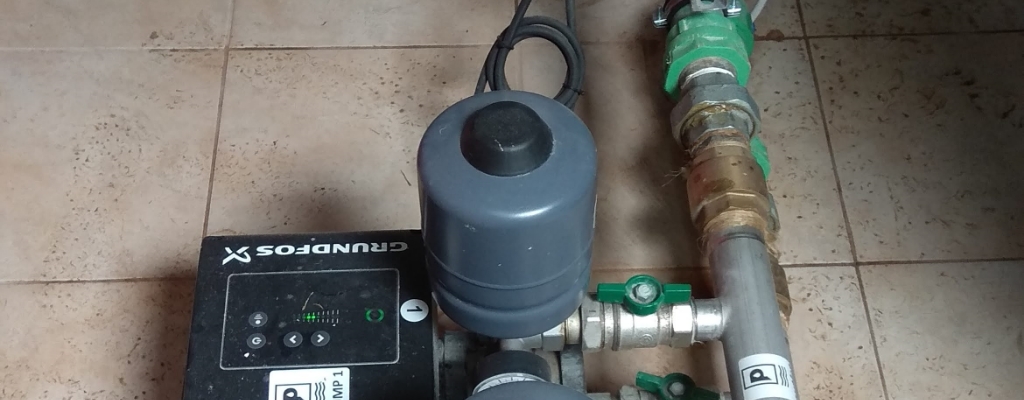
Electric pumps of any type such as horizontal, vertical or submersible for transporting clean water, sewage or rainwater and sewage. Made of cast iron, stainless steel or titanium depending on the requirements and quality of the pumped liquid. Automatic operation with ecological motors and frequency control via inverter regulator for greater economy and lifespan. Applications for home and professional use in irrigation, water supply, sewerage and water treatment. Certified materials from international organizations such as WRAS, ATEX.